The construction industry is at a crossroads. Traditional methods are struggling to keep pace with the growing demands for speed, cost-effectiveness, and sustainability. Enter hybrid modular construction, a game-changing approach that combines off-site prefabrication with on-site customization. This innovative model delivers projects 30–50% faster while cutting costs by 20–35% [1][13]. Think of it as the Pareto principle applied to building: 20% strategic effort yielding 80% of the benefits, including rapid scalability, minimized risk, and accelerated modular ROI. For real estate developers, modular factory owners, general contractors, and private equity firms, solutions like Podular represent not just an innovation but a necessary evolution in prefab strategy. By merging factory precision with design flexibility, hybrid modular construction addresses chronic industry challenges such as labor shortages, schedule overruns, and capital inefficiencies [7][18].
Minimal Site Disruption and Rapid Deployment Unlock Faster ROI
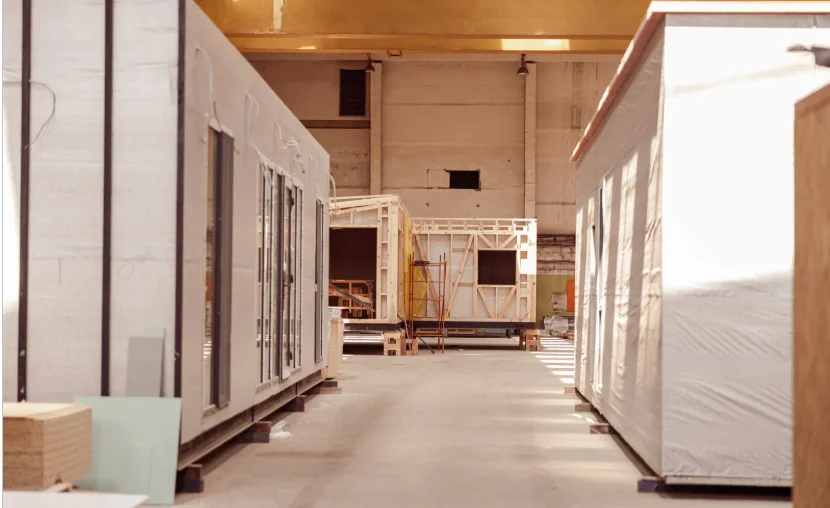
Hybrid modular construction fundamentally reshapes project timelines by moving 60–80% of construction activities into controlled factory environments [4][12]. This dramatically reduces on-site labor needs by up to 60% and slashes project durations by 35–50% compared to traditional methods [13][14]. Consider New York City’s rapid deployment of modular hospitals in under three weeks during the COVID-19 pandemic, a feat made possible by pre-fabricated volumetric units addressing urgent healthcare needs [14]. Similarly, Marriott Hotels has accelerated brand expansion by using modular guest rooms manufactured off-site, cutting hotel construction timelines by 40% [16].
The financial benefits are significant. A 2025 industry analysis of 30 large-scale projects revealed that modular techniques reduce construction costs by an average of 22% while improving modular ROI velocity by 35% [13]. This stems from concurrent workflows: site preparation occurs simultaneously with module fabrication, eliminating sequential delays. The 55-story prefabricated skyscraper in Singapore, for example, achieved 60% faster completion than conventional high-rises, translating to earlier lease-up and revenue generation [14]. Furthermore, weather-related disruptions—which impact 45% of traditional projects—plummet to under 10% with hybrid modular methods due to reduced on-site exposure [12][18].
Building Information Modeling (BIM) serves as the backbone of this efficiency, enabling precise digital prototyping that reduces errors by 35% [11]. Integrated with automated logistics systems, BIM ensures just-in-time module delivery, minimizing on-site storage and handling. Robotics in factory settings further enhances precision; automated welding and assembly lines cut material waste by 18–30% while improving structural tolerances to within 2mm accuracy [18][20]. These technologies transform deployment into a plug-and-play process, where modules are craned into position and connected within days rather than weeks [4][16], enabling low-effort deployment.
Streamlined Scope and Prefabrication Reduce Coordination Overhead and Build Risk
Traditional construction often suffers from fragmented coordination among architects, engineers, and contractors—a pain point that consumes 30% of project time in rework and conflict resolution [5][11]. Hybrid modular condenses this complexity by standardizing core components (e.g., bathroom pods, kitchen cores) while allowing site-specific adaptations [4][15]. This “productization” of building elements reduces design variables by up to 70%, creating a repeatable library of pre-engineered solutions [10][19].
Risk mitigation is equally significant. Factory-controlled environments enforce rigorous ISO 9001 quality standards, ensuring 99% compliance with structural and safety specifications, compared to 85% in traditional builds [19][13]. Dodge Data & Analytics corroborates this, finding that 87% of modular adopters report higher schedule certainty and 35% fewer change orders [3]. At Flora Arca Mata Elementary School in California, a hybrid approach (80% modular, 20% stick-built) slashed contingency reserves to under 1% of the budget, eliminating overtime and change orders while saving $10 million [15].
A Hybrid Modular Approach Balances Customization with Repeatability for Scalable Growth
The essence of hybrid modular lies in its adaptive configuration: volumetric modules handle complex service-intensive areas (e.g., kitchens, bathrooms), while 2D panels enable bespoke façades and layouts [4][15]. CoreHaus’ hybrid model exemplifies this, using 3D “pods” for wet cores and 2D panels for exterior envelopes, reducing transport costs by 30% while accommodating curved or irregular designs [4]. This flexibility supports scalable replication across portfolios; educational institutions like Lemon Grove Early Childhood Center deploy identical classroom modules across campuses, with site-specific adaptations for seismic zones or aesthetics [15], enabling rapid scalability.
Podular’s Efficiency Model Aligns with Capital Constraints While Preserving Design Flexibility
Podular embodies the hybrid modular ethos, optimizing the 80/20 rule: 20% strategic effort (standardized core systems) delivers 80% of benefits (cost, speed, quality), leaving 80% of resources for site-specific customization [4][15]. This model aligns with private equity’s focus on capital efficiency; projects like Isaac L. Sowers Middle School saved 25–35% in construction costs while allocating savings to high-impact design elements like atriums and STEM labs [15].
Financially, Podular’s factory-automated workflows reduce labor costs to 30% of budgets (vs. 50% traditionally), freeing capital for sustainability investments [9][18].
Key Takeaways
- Hybrid modular construction reduces project timelines by 35–50% and costs by 20–35% through factory prefabrication and concurrent workflows [1][13][14].
- Standardized core components minimize coordination risks and change orders, while enabling site-specific customization via panels and façades [4][15].
- Case studies demonstrate 25–35% cost savings in educational and hospitality projects, with contingency reserves under 1% [15][16].
- AI, robotics, and circular materials will drive the next wave of efficiency, with the modular market reaching $175B by 2025 [18][20].
- Podular’s 80/20 model aligns capital constraints with design flexibility, turning construction into a scalable, high-ROI enterprise [4][9].
Hybrid modular construction represents a paradigm shift from linear, site-bound processes to integrated, factory-driven ecosystems. Podular epitomizes this evolution, offering a capital-efficient model where minimal standardized effort unlocks maximal benefits: 50% faster deployments, 30% cost reductions, and scalable replication without design compromise. For real estate developers, this means accelerated asset monetization; for modular factories, predictable demand pipelines; and for private equity, de-risked investments with ESG-aligned returns. As urbanization intensifies and labor shortages persist, the 80/20 efficiency of hybrid modular isn’t just advantageous—it’s inevitable.
Ready to explore how Podular can revolutionize your next project? Contact us today to discover the power of hybrid modular construction and unlock unparalleled efficiency and value.
References
[1] https://www.maximizemarketresearch.com/market-report/global-modular-construction-market/25426/
[2] http://www.prefabex.com/posts/top-trends-in-modular-construction-for-2025
[3] https://www.construction.com/reports/major-growth-expected-prefabrication-permanent-modular-construction-new-study-finds/
[4] https://www.corehaus.co.uk/hybrid-modular-construction/
[5] https://www.wbdg.org/resources/site-and-modular-construction-explained
[6] https://module-t.com/modular-construction-trends-2025/
[7] https://www.techsciresearch.com/report/global-modular-construction-market/3342.html
[8] https://www.e-architect.com/articles/modular-and-prefabricated-construction
[9] https://hybridcncparts.com/blog/how-to-improve-roi-with-hybrid-manufacturing/
[10] https://www.3ds.com/industries/architecture-engineering-construction/productization-modular-construction
[11] https://proddrupalcontent.construction.com/s3fs-public/DCN_SMR/BIMConstructionGlobalMarkets_DDA_Secured.pdf
[12] https://streammodular.com/blog/10-benefits-of-volumetric-construction/
[13] https://www.civilengineeringjournals.com/ijcec/article/35/5-2-10-158.pdf
[14] https://www.gwgci.org/modular-construction-trends-2025/
[15] https://www.americanmodular.com/how-hybrid-design-maximizes-flexibility-and-value/
[16] https://www.modular.org/modular-hotels-and-hotel-room-construction/
[17] https://health-spaces.com/our-solutions/modular-healthcare-construction/
[18] https://kodifly.com/inside-the-rise-of-modular-construction-trends-benefits-challenges
[19] https://quadraconsulting.com/why-modular-building-companies-need-iso/
[20] https://www.allplan.com/blog/prefabrication-in-transition-what-will-2025-bring/