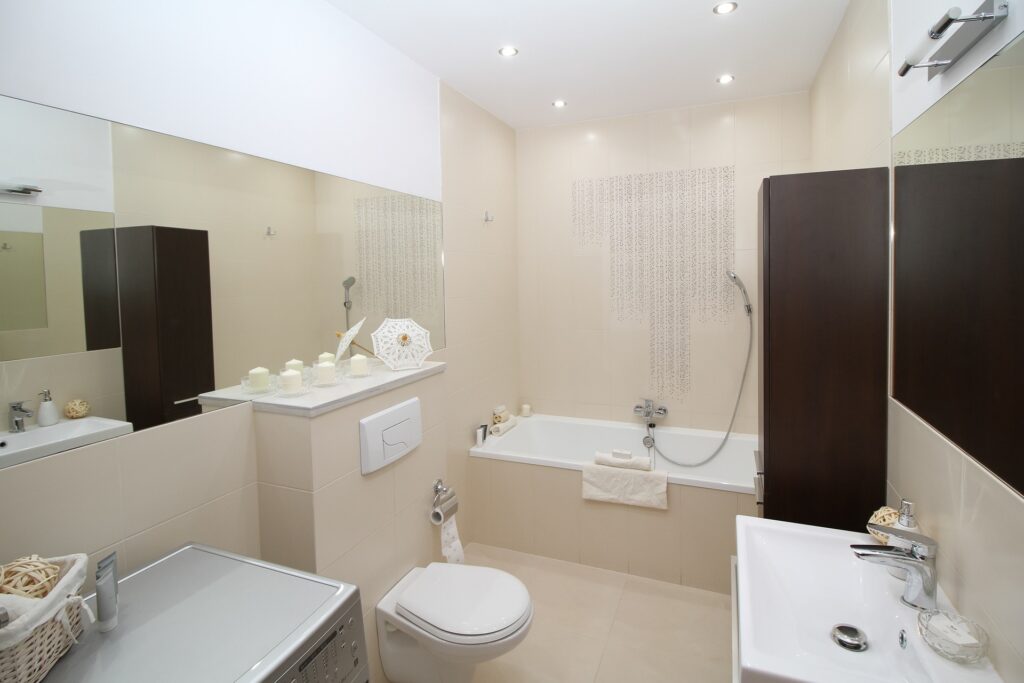
The global housing crisis is a stark reality, marked by a critical shortage of affordable homes and spiraling construction costs. But what if a game-changing solution was already within reach? Enter bath and kitchen pods – prefabricated, modular units built off-site that promise to revolutionize the construction industry. These innovative pods offer the potential to accelerate construction timelines by 30-50%, reduce reliance on skilled labor by up to 45%, and slash overall project costs by 15-20% [1][4][16]. As the multifamily modular housing market is projected to surge from $52.12 billion in 2024 to $73.84 billion by 2029, and the bathroom and kitchen pod markets expand at impressive rates, are pods the key to unlocking housing affordability [1][2][3]?
The Housing Crisis and Modular Construction’s Strategic Role
Traditional construction methods are struggling to keep pace with demand, leading to a global deficit of millions of housing units [4][13]. In the U.S. alone, a staggering 5.5 million unit shortage is driving up prices, with median home costs consuming over 30% of household incomes [4][16]. Modular construction, particularly bath and kitchen pods, offers a scalable solution by enabling parallel workflows. While site work progresses, pods are fabricated in controlled factory environments, slashing project durations by 20-50% [10][14][16]. This approach tackles the “time-cost paradox,” where delays significantly inflate financing expenses. Recognizing the potential of modular techniques, the Biden administration has included them in its Housing Supply Action Plan, aiming to create 500,000 new multifamily units [14].
Factory-based production also mitigates skilled labor shortages. A 2023 Modular Building Institute report highlights that modular projects require 35-45% fewer on-site tradespeople [1][10]. By consolidating plumbing, electrical, and tiling into pod assembly lines, risks like weather disruptions and trade coordination failures (responsible for 35% of traditional construction delays) are minimized [10][19].
Accelerating Construction Timelines Through Standardization
Standardized bath and kitchen pods compress development cycles by transforming complex tasks into parallel workflows. Projects utilizing pods report 30-60% faster completion rates [4][10][14]. For instance, Vederra Modular’s Colorado developments consistently achieve 50-60% shorter build times [4]. This acceleration directly enhances housing affordability; every month saved on construction reduces carrying costs by 2-4%, translating to 6-12% lower total project expenses [4][16].
Labor efficiencies are equally transformative. A single bathroom pod replaces 8-12 distinct trade call-offs required in traditional builds [10][19]. This consolidation reduces on-site labor hours by 40-50%, as demonstrated in the BJC Phase III hospital expansion, where prefabrication diverted 45,000 labor hours off-site [11].
Cost Efficiency and Onsite Disruption Mitigation
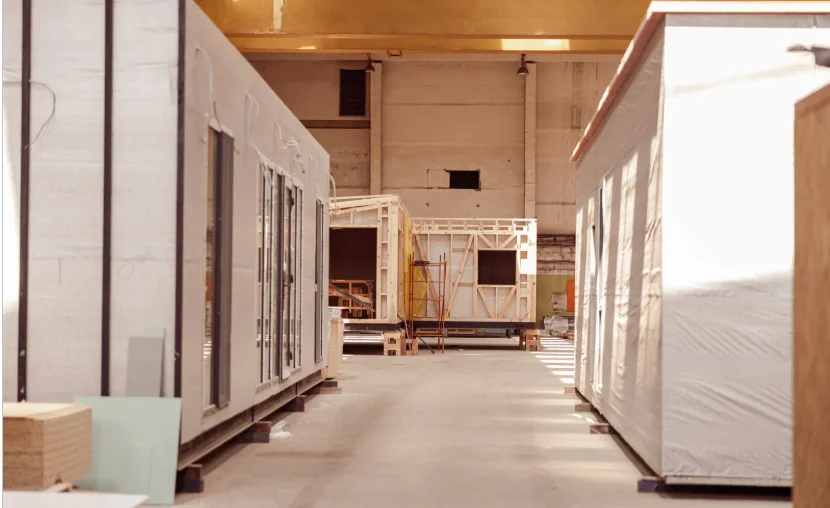
Offsite pod fabrication generates significant cost savings through material optimization, waste reduction, and bulk purchasing. Factory settings achieve near-zero material waste via CNC cutting and just-in-time inventory, contrasting with traditional construction’s 30% waste rate [8][10][15]. These efficiencies translate to 15-20% lower total project costs. Rise Modular’s 192-unit St. Paul apartment complex leveraged pod-based construction to offer rents $200-$300 below market averages, demonstrating direct affordability benefits [4].
Onsite disruption minimization is equally impactful. Pod installation requires 80% fewer vehicle movements and 60% less laydown space than traditional methods, easing congestion in dense urban infill sites [11][18].
Streamlined Permitting and Inspection Processes
Integrated pod designs simplify regulatory compliance by standardizing code-approved assemblies. The ICC/MBI 1200-2021 and 1205-2021 standards establish uniform protocols for off-site components, reducing jurisdictional variances [17]. Authorities Having Jurisdiction (AHJs) accept third-party factory certifications as equivalent to on-site inspections, accelerating permit issuance by 30-40% [15][17].
Key Takeaways:
- Accelerated Construction: Reduces project timelines by 30-50%.
- Cost Savings: Lowers overall project costs by 15-20%.
- Labor Efficiency: Decreases on-site labor demands by 40-50%.
- Quality Control: Factory-based production ensures consistent quality and reduces defects.
- Regulatory Compliance: Streamlined permitting and inspection processes.
- Scalability: Supports dense infill and multifamily housing expansion.
Conclusion
Bath and kitchen pods represent a paradigm shift in housing delivery, offering quantifiable advantages in speed, cost, and quality. By addressing the core drivers of the housing crisis, pods offer a pathway to more affordable and accessible housing. The convergence of BIM, policy support, and sustainability imperatives will further accelerate adoption. For developers and investors, early engagement with pod technologies is a strategic imperative for building equitable, resilient communities.
Ready to explore how bath and kitchen pods can transform your next project? Contact us today to learn more.
Sources and References
[1] https://www.globenewswire.com/news-release/2025/05/29/3090077/28124/en/Multifamily-Modular-and-Prefabricated-Housing-Construction-Market-Report-2025-Key-Players-like-ATCO-and-Greystar-are-Leveraging-Innovations-for-Affordable-Housing-Solutions-Amid-Ri.html
[2] https://www.verifiedmarketreports.com/product/bathroom-pods-market/
[3] https://www.verifiedmarketreports.com/product/modular-kitchen-pods-market/
[4] https://www.realestatenews.com/2024/11/02/can-modular-homes-help-solve-the-affordability-problem
[5] https://www.thebusinessresearchcompany.com/market-insights/single-family-modular-and-prefabricated-housing-construction-market-overview-2025
[6] https://www.360iresearch.com/library/intelligence/prefabricated-bathroom-pods
[7] https://www.archivemarketresearch.com/reports/prefabricated-kitchen-pod-491877
[8] https://paradisehomeswv.com/blog/the-impact-of-modular-homes-on-community-development
[9] http://www.diva-portal.org/smash/get/diva2:1150676/FULLTEXT01.pdf
[10] https://interpod.com/7-ways-modular-bathroom-construction-saves-you-time/
[11] https://constructforstl.org/offsite-construction-case-study-bjc-phase-iii-bathroom-pod-fabrication-and-installation/
[12] https://www.procore.com/library/bim-prefabrication
[13] https://www.modular.org/2024/02/15/the-building-industry-needs-a-moonshot-speech/
[14] https://streammodular.com/blog/is-modular-construction-the-best-solution-for-affordable-housing/
[15] https://www.iccsafe.org/wp-content/uploads/Facilitating-Affordability-Sustainability-Goals-offsite-construction.pdf
[16] https://www.mckinsey.com/capabilities/operations/our-insights/making-modular-construction-fit
[17] https://www.greenbuildermedia.com/blog/icc-and-modular-building-institute-release-standards-for-off-site-construction
[18] https://ascelibrary.org/toc/jcemd4/150/8
[19] https://www.surepods.com/knowledge-center/meeting-hospitality-construction-demands-with-prefabricated-bathrooms
[20] https://theoffsiteguide.com/articles/5-applications-for-modular-kitchen-and-bathroom-pods